Multi-use · Chincoteague, Virginia
Wildlife Loop
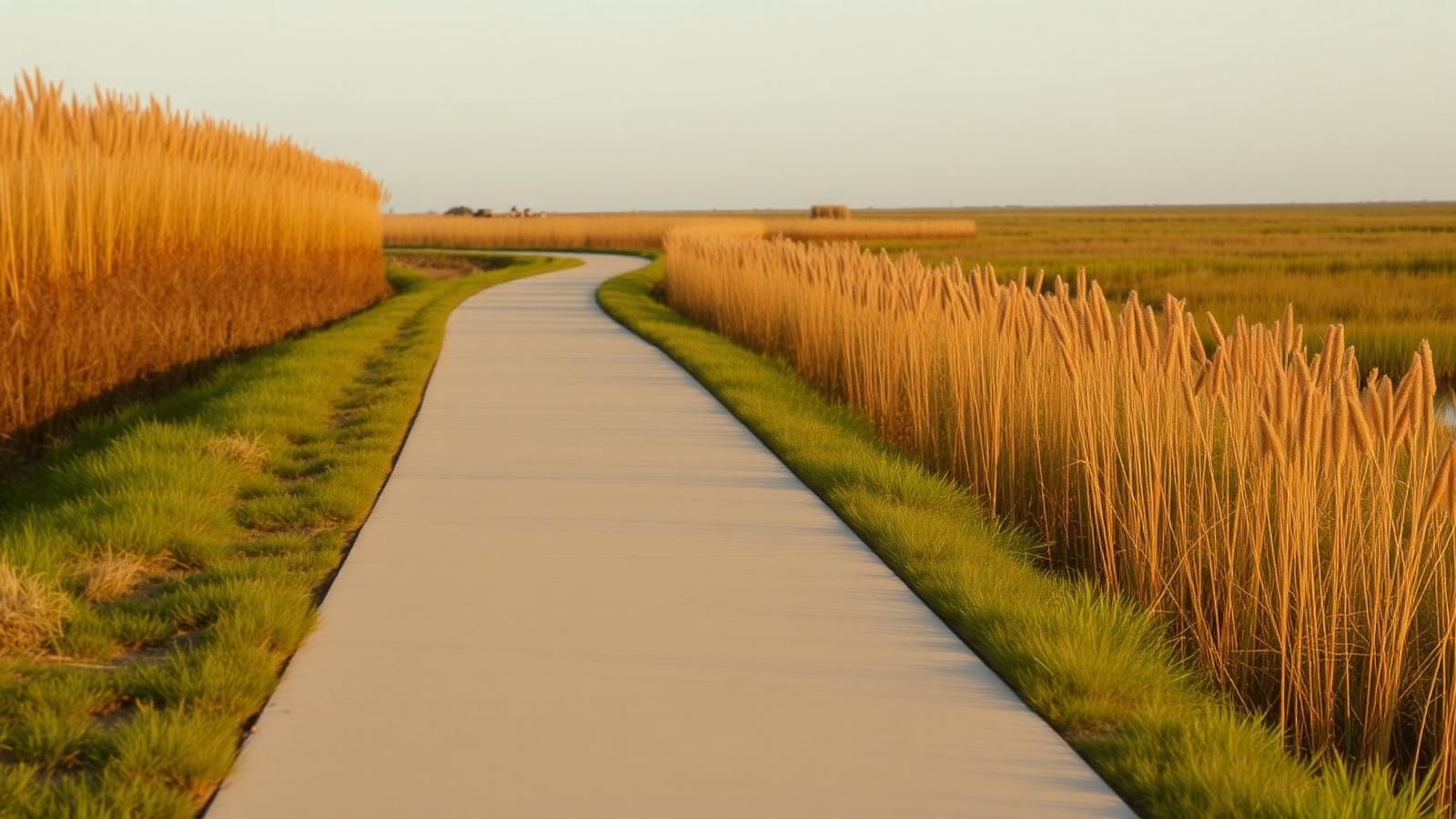
A flat, paved 3.25-mile loop around a managed freshwater pool at Chincoteague National Wildlife Refuge, open only to walkers and cyclists until 3 p.m. and shared with cars after.
- Distance
- 3.3 mi
- Elevation gain
- Not yet verified
- Difficulty
- Easy
- Typical time
- Not yet verified
About this route
The Wildlife Loop is a paved circuit on Assateague Island, inside Chincoteague National Wildlife Refuge. The National Park Service lists it among the Virginia District trails of Assateague Island National Seashore, but the ground is U.S. Fish and Wildlife Service land and refuge regulations are the ones that apply. Agency mileage differs slightly: the Park Service publishes 3.25 miles, while the refuge's own trail map gives 3.2. Both describe the same tread. It is wide, flat and paved, filed by the refuge under its paved trails and rated easy for walking and bicycling.
The loop encircles a moist-soil management unit, a freshwater pool the Fish and Wildlife Service manages for migrating birds. The refuge describes shallow water and waterfowl in winter, and mudflats used by shorebirds and wading birds in summer; Snow Goose Pool, inside the loop, it calls a popular spot for many bird species. The Park Service points out an eagle's nest in a tall stand of loblolly pine off the right-hand side of the loop, just short of the Black Duck Trail entrance, and names sika elk, Delmarva fox squirrels and snapping turtles among the wildlife here. Benches and overlooks are set along the route, and the unpaved Marsh Trail leaves the loop for an observation platform above Snow Goose Pool.
A few refuge rules shape how and when to visit. Vehicles are allowed on the loop from 3 p.m. until dusk, so an afternoon walk or ride means sharing a paved lane with cars; before 3 p.m. it is pedestrians and cyclists only, and the refuge asks drivers to use caution and keep to the speed limit. Pets are prohibited throughout the refuge, including inside vehicles, with only ADA service dogs permitted on a leash no longer than six feet. Entry on foot or by bicycle is free, but a vehicle needs a pass starting at $10 for the day. The refuge warns that ticks and mosquitoes may carry disease and advises staying on trails, using repellent, wearing long sleeves and long pants and inspecting yourself afterward, and it describes poison ivy as abundant on the refuge. Ponies and other wildlife may also carry disease and must not be fed or touched; the Park Service asks visitors to stay at least 40 feet from wild horses. No drinking water is listed among the amenities here, so carry your own. Refuge gate hours change with the season and the loop closes with them, so check before a dawn or dusk visit.
Why this difficulty rating: The refuge's 2020 trail map lists the Wildlife Loop under Paved Trails and rates it "Walking and bicycling - easy"; the refuge's trails page also rates it Easy. The refuge describes it as a wide, flat, paved trail, and its accessibility page describes the terrain of Assateague Island as mostly flat. The published distance is 3.25 miles (3.2 on the refuge trail map).
Highlights
- Paved 3.25-mile loop around a moist-soil management unit (the refuge trail map gives 3.2 miles)
- Pedestrians and cyclists only before 3 p.m.; open to vehicles 3 p.m. to dusk
- Shallow water and waterfowl in winter; mudflats used by shorebirds and wading birds in summer
- Snow Goose Pool, which the refuge calls a popular spot for many bird species
- An eagle's nest in loblolly pine near the Black Duck Trail entrance, noted by the Park Service
- Sika elk, Delmarva fox squirrels and snapping turtles listed by the Park Service
- Benches and overlooks along the route
- One of four paved trails the refuge lists as wheelchair friendly
- Free to enter on foot or by bicycle
- The unpaved Marsh Trail branches off to an observation platform overlooking Snow Goose Pool
Map and trailheads
Approximate locations for orientation only. Carry an offline map — cell service is unreliable on much of this network.
Know before you go
- Route type
- Loop
- Surfaces
- Paved
- Setting
- Coastal, Park
- Amenities
- Parking, Restrooms, Free, Open year-round
- Parking
- The National Park Service lists auto parking, bus/RV parking and trailhead access among the amenities at the Wildlife Loop. The Herbert H. Bateman Educational and Administrative Center at 8231 Beach Road, Chincoteague, VA 23336 is the second left upon entering the refuge and holds an information desk, exhibits and an auditorium. Toms Cove Visitor Center is at 8586 Beach Road, next to the recreational beach at the end of Beach Road.
- Restrooms
- The National Park Service amenity listing for the Wildlife Loop includes a vault/composting toilet. No flush facilities are specified by the agency for this trail.
- Water
- No drinking water is listed among the official amenities for this trail. The Park Service names benches/seating, a bicycle rack, auto parking, bus/RV parking, a vault/composting toilet, trailhead access and trash receptacles, but no water. The Park Service safety page urges visitors to bring water and notes that drinking water availability is limited in places. Carry your own, particularly in summer, when refuge gates stay open as late as 10:00 p.m. and the full loop is 3.25 miles.
- Fees
- Entry on foot or by bicycle is free — the Park Service fee page lists "Foot/Bicycle: No Fee," and the refuge states entrance is free for visitors planning to hike or bike into the refuge — so walking or riding the Wildlife Loop costs nothing. Vehicle entry requires a pass: $10.00 for one day, available only at the Virginia Entrance Station; $25.00 for seven days; or $45.00 for a Refuge Annual Pass, valid one year from purchase. The Park Service also lists a $45.00 vehicle option consisting of the USFWS Migratory Waterfowl (Federal Duck) Stamp at $25.00 plus a $20.00 beach parking fee upgrade, that upgrade valid July 1 through June 30 annually.
- Permits
- No permit is required to walk or bicycle the Wildlife Loop. The refuge's trail map lists permits as required elsewhere on the refuge for hunting, for over-sand vehicle use, and for open fires.
- Hours
- The loop is governed by refuge gate hours for roads, beach and trails, which change seasonally. The refuge's Visit Us page lists: May through September, 5:00 a.m. to 10:00 p.m. daily; October, 6:00 a.m. to 8:00 p.m. daily; November through mid-March, 6:00 a.m. to 6:00 p.m. daily; mid-March through April, 6:00 a.m. to 8:00 p.m. daily. The refuge's 2020 trail map gives a slightly different grouping (April and October, 6:00 a.m. to 8:00 p.m.; November through March, 6:00 a.m. to 6:00 p.m.), so confirm current hours before a dawn or dusk visit. The Wildlife Loop is open to vehicle traffic daily from 3:00 p.m. to dusk; before 3:00 p.m. it is open only to pedestrians and cyclists. The refuge trail map states the refuge is open seven days a week. Refuge visitor center hours are 9:00 a.m. to 4:00 p.m. daily, closed Thanksgiving Day, December 24, 25, 26 and 31, and January 1.
- Dogs
- Dogs not allowed
- Accessibility
- The refuge states it has "four paved trails that are wheelchair friendly, the Wildlife Loop, Woodland, Black Duck, Swan Cove Trails," and describes the Wildlife Loop as a wide, flat, paved trail. Its accessibility page says the mostly flat terrain of Assateague Island makes navigating the trails with assistive equipment an enjoyable experience, and that many trails have benches to provide places to rest. The Park Service designates the Wildlife Loop an Accessible Trail with wheelchair access and lists benches/seating among its amenities. ADA service dogs are permitted and must be kept on a leash no longer than six feet.
- Stroller friendly
- Not yet verified
- Good with kids
- Yes
- Seasonal notes
- Refuge gate hours change several times a year, so the usable window varies considerably between summer and winter. The refuge describes the loop's seasonal character directly: shallow water and waterfowl in winter, mudflats visited by shorebirds and wading birds in summer. Across the refuge as a whole, the trail map sets out the same yearly cycle — songbirds, wading birds and shorebirds turn up in spring and many remain through the summer, migrating raptors and monarch butterflies pass through in fall, and waterfowl spend the winter. The Park Service notes that mosquitoes and other biting insects may be abundant from May to November.
- Weather exposure
- The agency does not publish a shade or exposure rating for this trail. The Park Service safety page advises avoiding sun exposure between 10 a.m. and 4 p.m. when the sun's rays are strongest, bringing water, and retreating to a vehicle or other shelter if thunder can be heard.
- Cell service
- Not yet verified
- Emergency
- Not yet verified
Hazards and wildlife
- Shared vehicle traffic on the loop daily from 3 p.m. to dusk; the refuge asks drivers to use caution and keep to the speed limit
- Ticks and mosquitoes that the refuge warns may carry disease; stay on trails, use repellent, wear long sleeves and long pants, and inspect yourself carefully
- Biting insects may be abundant from May to November per the National Park Service
- Poison ivy is described by the refuge as abundant on the refuge; stay on trails to avoid contact
- Ponies and wildlife may carry disease; do not feed or touch them, and stay at least 40 feet from wild horses per National Park Service guidance
- Sun exposure: the Park Service advises avoiding the sun between 10 a.m. and 4 p.m., when its rays are strongest, and bringing water
- Lightning: the Park Service advises that if thunder can be heard, lightning is present, and to retreat to a vehicle or other shelter
- Sick or injured wildlife should be given 100 feet of space, and refuge staff contacted
The loop encircles a moist-soil management unit and, per the refuge, is a great place to observe wildlife. The Park Service describes the site as offering excellent views of the marsh and a great example of how the U.S. Fish and Wildlife Service manages freshwater pools for migrating birds. Snow Goose Pool, inside the loop, is described by the refuge as a popular spot for many bird species. The Park Service notes an eagle's nest in a tall stand of loblolly pine off the right-hand side of the loop, just before the Black Duck Trail entrance, and lists sika elk, Delmarva fox squirrels and snapping turtles here. Disturbing, feeding or harassing ponies or wildlife is prohibited; the refuge warns that ponies and wildlife may carry disease and that feeding or touching animals puts visitors at risk, and the Park Service directs visitors to stay at least 40 feet from wild horses. Keep 100 feet from sick or injured wildlife and contact refuge staff.