Multi-use · Chincoteague, Virginia
Woodland Trail
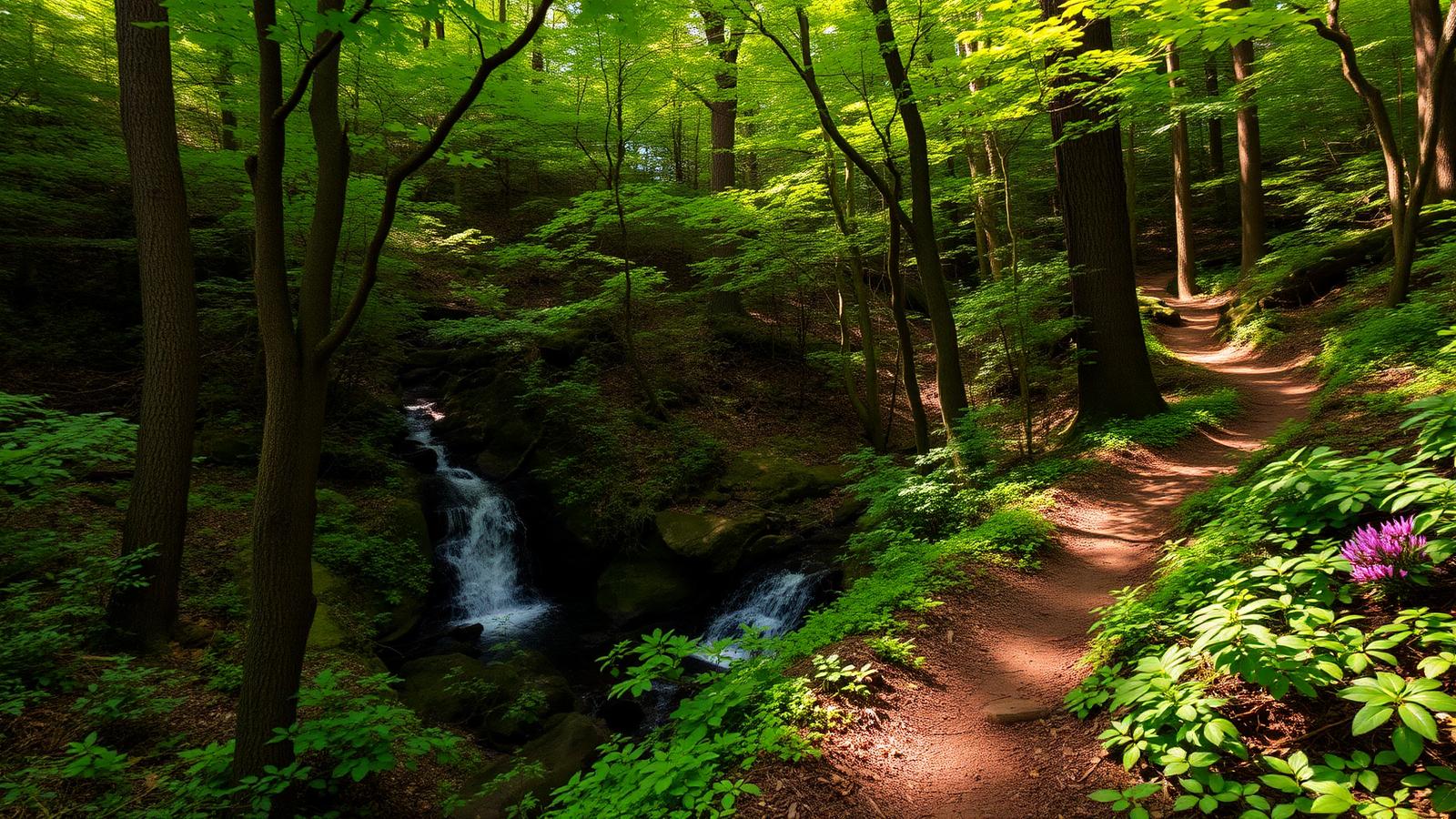
A flat, paved 1.75-mile lollipop through pine forest at Chincoteague National Wildlife Refuge, with an overlook where the ponies are sometimes visible. FWS lists it as wheelchair friendly and kid friendly.
- Distance
- 1.8 mi
- Elevation gain
- Not yet verified
- Difficulty
- Easy
- Typical time
- Not yet verified
About this route
The Woodland Trail runs off Beach Road inside Chincoteague National Wildlife Refuge, reached by a short spur that leads west into pine forest south of the refuge visitor center. The Fish and Wildlife Service lists the trail at 1.75 miles and calls the shape a lollipop (an out-and-back stem leading to a loop), meaning a stem from the trailhead that opens into a loop. The refuge's own 2020 trail map prints 1.6 miles instead, so treat the distance as approximate. FWS describes the trail as flat and paved and counts it among four paved trails at the refuge that are wheelchair friendly, alongside the Wildlife Loop, Black Duck and Swan Cove trails. The agency is upfront about the catch: the pavement carries some bumps where tree roots have pushed it up.
The draw is the forest and the overlook. FWS describes the route as passing through pine forest and points visitors toward Delmarva Peninsula fox squirrels along the way. At the overlook, in the agency's own framing, you can sometimes see the Chincoteague ponies, which is worth reading as sometimes rather than reliably. Damage to the pines from the southern pine beetle has made the trail, per FWS, a popular place for seeing woodpeckers, and the refuge's wildlife-watching page also names it as a place to observe songbirds. The official refuge trail map marks parking, restrooms, an observation platform and a pony-view point together at the trail access.
The planning details matter here more than the walking does. A daily vehicle pass is $10, but pedestrians and bicyclists enter free, so arriving on foot or by bike skips the fee entirely. Hours are seasonal: 5 a.m. to 10 p.m. from May through September, but 6 a.m. to 6 p.m. from November into mid-March. Pets are not allowed anywhere on the refuge, not even inside a parked vehicle, with ADA service dogs the only exception. The refuge's safety guidance names ticks and mosquitoes, which it says may carry disease, and poison ivy, which it calls abundant and a reason to stay on the trail. Hunting occurs in areas surrounding refuge trails; FWS says archery season is usually October through January and firearms season usually November through January, with no hunting within 50 feet of the center line of any road or trail and none on Sundays or during Waterfowl Weekend.
Why this difficulty rating: FWS rates the trail Easy on its trails page, and the refuge's 2020 trail map lists it under Paved Trails as \"Walking and bicycling - easy.\" It is short, flat and paved. The one stated complication is surface irregularity: FWS says the trail \"will have some bumps due to tree root growth.\" FWS publishes no elevation-gain figure for this trail, noting only at the network level that \"the refuge has few hills, so most trails have very little elevation-gain.\"
Highlights
- Flat and paved, and one of four paved trails FWS lists as wheelchair friendly at the refuge
- Overlook where, per FWS, the Chincoteague ponies can sometimes be seen
- FWS suggests looking for Delmarva Peninsula fox squirrels along the trail
- Southern pine beetle damage has made it, in the refuge's words, a popular place for seeing woodpeckers
- Parking, restrooms, an observation platform and a pony-view point marked together at the trail access on the official refuge trail map
- Pedestrians and bicyclists enter the refuge free of charge
Map and trailheads
Approximate locations for orientation only. Carry an offline map — cell service is unreliable on much of this network.
Know before you go
- Route type
- Not yet verified
- Surfaces
- Paved
- Setting
- Forest, Coastal
- Amenities
- Parking, Restrooms, Open year-round
- Parking
- The official 2020 refuge trail map marks a parking area, restrooms, an observation platform and a pony-view point together at the Woodland Trail access, reached by a short spur running west off Beach Road south of the refuge visitor center. FWS does not publish the lot's capacity, its coordinates, or a separate street address. The refuge's mailing address, 8231 Beach Road, Chincoteague Island, VA 23336, is the visitor center rather than this trailhead.
- Restrooms
- The official refuge trail map shows a restroom symbol at the Woodland Trail access area. FWS does not state whether they are seasonal or wheelchair accessible; call the refuge at (757) 336-6122 to confirm before relying on them.
- Water
- No drinking water source is shown at the Woodland Trail access on the official refuge trail map or listed for this trail on any official refuge page. Carry your own.
- Fees
- $10 daily vehicle pass. Pedestrians and bicyclists enter free, so arriving on foot or by bicycle avoids the fee. Other options published by the refuge: $25 weekly, $45 annual refuge pass, $80 interagency annual, $20 annual senior, $80 lifetime senior, and $5 per person for taxi or rideshare passengers. Free entry for active-duty U.S. military and dependents, veterans and Gold Star family members, Access Pass holders, and 4th graders (or 10-year-old homeschool students) with an Every Kid Outdoors voucher. When no staff is present, day passes are sold at a self-serve fee station at the refuge visitor center, the second left after entering.
- Permits
- No permit is required to walk or bike the trail. Vehicles entering the refuge need a valid entrance pass. Hunting requires a refuge-issued permit.
- Hours
- Refuge roads, beach and trails are open daily on seasonal hours: 5:00 a.m. to 10:00 p.m. May through September; 6:00 a.m. to 8:00 p.m. mid-March through April and during October; 6:00 a.m. to 6:00 p.m. November through mid-March. The visitor center is open daily 9:00 a.m. to 4:00 p.m., closed Thanksgiving Day, December 24, 25, 26 and 31, and January 1. The refuge's 2020 printed trail map gives slightly different season breaks (April and October 6 a.m. to 8 p.m.; November through March 6 a.m. to 6 p.m.).
- Dogs
- Dogs not allowed
- Accessibility
- FWS tags the Woodland Trail \"Wheelchair friendly\" on its trails page, and the refuge's accessible-trails page names it as one of four paved trails that are wheelchair friendly, alongside the Wildlife Loop, Black Duck and Swan Cove trails. That page adds that many trails have benches to rest on and that the mostly flat terrain of Assateague Island makes navigating refuge trails with assistive equipment an enjoyable experience. The caveat comes from the agency itself: the trail is flat and paved but will have some bumps due to tree root growth. FWS publishes no trail width, grade, cross-slope or surface-firmness measurements, and does not state whether the restrooms at the trail access are accessible. Service animals as defined by ADA regulations are permitted on the refuge; all other pets are not.
- Stroller friendly
- Not yet verified
- Good with kids
- Yes
- Seasonal notes
- The refuge trail map states that the refuge is open seven days a week, with seasonal hours covering all twelve months. FWS says archery hunting season is usually October through January and firearms season usually November through January, with no hunting on Sundays or during Waterfowl Weekend, the four days from Thanksgiving Thursday through Sunday. The refuge describes songbirds, wading birds and shorebirds arriving in spring and many staying through summer, migratory raptors and monarch butterflies in fall, and waterfowl wintering on the refuge.
- Weather exposure
- FWS publishes no shade, exposure or weather guidance for this trail. The agency describes the route as passing through pine forest. The refuge's own safety guidance asks visitors to wear long-sleeved shirts and long pants and use repellent against ticks and mosquitoes while exploring the area.
- Cell service
- Not yet verified
- Emergency
- Not yet verified
Hazards and wildlife
- Bumps in the pavement from tree root growth, stated by FWS on its trails page
- Ticks and mosquitoes, which the refuge says may carry disease; it advises staying on trails, using repellent, wearing long sleeves and long pants, and inspecting yourself carefully
- Poison ivy, which the refuge calls abundant and a reason to stay on refuge trails
- Ponies and wildlife on the refuge may carry disease; feeding and touching are prohibited, and the refuge asks visitors to keep 100 feet from sick or injured animals and contact refuge staff
- Hunting occurs in areas surrounding refuge trails: FWS says archery season is usually October through January and firearms season usually November through January, with no hunting within 50 feet of the center line of any road or trail and none on Sundays or during Waterfowl Weekend (Thanksgiving Thursday through Sunday)
- The refuge advises securing valuables out of sight and locking your vehicle
FWS points visitors on this trail toward Delmarva Peninsula fox squirrels, and notes that damage to pine trees from the southern pine beetle has made it a popular place for seeing woodpeckers. The trail's overlook is where, per FWS, you can sometimes see the Chincoteague ponies. The refuge's wildlife-watching page describes the Woodland Trail as a place to observe songbirds, Delmarva fox squirrels and ponies. Refuge rules prohibit disturbing, feeding or harassing ponies or wildlife; visitors are asked to keep a safe distance of 100 feet from sick or injured animals and contact refuge staff.